
La-Lipo is a non-surgical body contouring treatment designed for people who want thoughtful, gradual refinement — not dramatic intervention. Gentle by design. Grounded in how your body already works.

There's a kind of honesty that doesn't often get said out loud: wanting a change doesn't always mean wanting something dramatic. Sometimes it's the quiet thought — I wish I felt a little more comfortable in this dress — or that subtle awareness when you catch your reflection. These small wishes are real. They deserve a thoughtful response.
When someone first considers La-Lipo, their expectations are usually modest. They're not looking for a transformation that requires weeks of recovery or announces itself. What they want is something respectful — a process that fits into their life rather than pausing it. A choice that acknowledges how they already take care of themselves and simply adds to it.
That's precisely where La-Lipo sits. It's a treatment designed for people who want a grounded, measured approach to how they feel in their own body. Nothing radical. Nothing disruptive. Just a gentle, evidence-informed step toward a little more ease.
Curiosity and caution often arrive together at this stage, and that's completely natural. You might wonder whether the results will feel meaningful, or whether it will seem too similar to what you already do in your daily wellness routine. These are exactly the kinds of questions that lead to better, more aligned decisions.
A grounded mindset makes all the difference. La-Lipo is best understood as an invitation to refine, not to abandon anything. That approach reduces pressure, makes the process easier to follow, and helps you stay connected to realistic, satisfying outcomes. You're not chasing perfection — you're simply looking for a little more comfort in how you move through each day.
One last thought before we go deeper: change often feels more meaningful when it comes gradually. Small shifts allow you to understand what's working. They give you time to adjust expectations naturally and integrate any difference into your daily life at your own pace. This is a process that respects that rhythm entirely.
Self-care is valuable, but some areas of the body simply don't respond to lifestyle measures alone — not because anything is wrong, but because biology doesn't always follow our intentions. That's when professional, clinically supervised treatment becomes a meaningful option.
A qualified practitioner evaluates your individual health profile, lifestyle, and goals before any treatment begins. This ensures the approach is tailored — not generic — from the very first conversation.
Professional environments bring clinical standards, medical knowledge, and the experience to recognise what's appropriate for each individual. Safety isn't an afterthought here — it's woven into every step of the process.
Rather than guessing whether something is working, professional treatment includes ongoing review. Each session informs the next, and any adjustments are made thoughtfully, based on how your body is responding.
A responsible practitioner will always be candid about what the treatment can and cannot do. Honest conversations about realistic outcomes are not just ethical — they lead to better results and greater satisfaction.
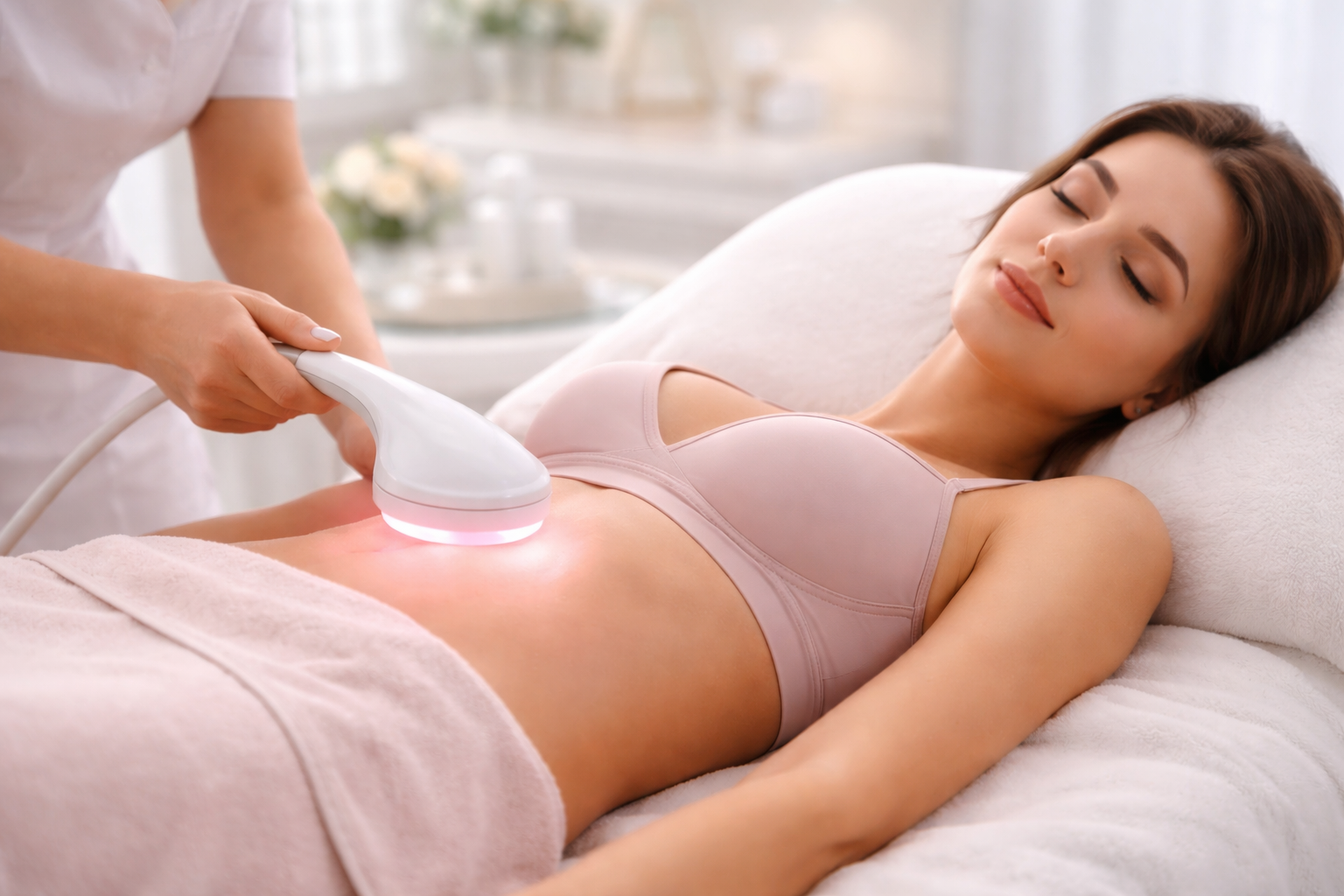
Understanding La-Lipo starts with understanding something your body already does naturally. Fat is a form of stored energy. Your body is constantly moving, releasing, and metabolising it as part of its normal daily function. La-Lipo works within that natural system — it simply provides a small, localised nudge that encourages the body to release stored fat in a specific area, which it then processes in its own time.
The treatment uses light energy delivered externally, which means nothing cuts through skin or tissue. There's no surgical disruption. Instead, it gently encourages the targeted cells to release their contents, which the body then handles through the same pathways it uses every day. This is what makes the approach feel gradual and natural rather than abrupt.
Because there's no skin incision and no recovery from surgical trauma, the experience from session to session is reliably predictable. People find it easy to plan around. There's no wondering how you'll feel afterwards, no period of physical limitation, and no moment where life needs to be suspended in order to heal.
Specialised applicators deliver targeted light energy to a specific area of the body from the outside. No heat that burns, no instruments beneath the skin.
The light energy creates a gentle signal in fat cells in the treated area, encouraging them to release their stored contents — much as they would in response to natural metabolic processes.
The released contents are moved through the lymphatic system — the body's own filtration network — and metabolised naturally. This is why hydration and gentle movement support the process so well.
Results develop steadily over a series of sessions. Each session builds on the last, and the body's response becomes more visible over time as the cumulative effect takes shape.

La-Lipo speaks to different people for a range of reasons, but there are some threads that tend to run through the experiences of those who find it most suitable. Perhaps the clearest one is a desire for refinement rather than reinvention.
If you generally lead a healthy life — you move regularly, you eat reasonably well — but you have one area that simply doesn't shift, La-Lipo can feel like a practical and proportionate next step. It's a way of addressing something specific without requiring any kind of wholesale change.
Another common thread is a preference for low-intervention options. Many people simply do not want surgery. Not because they're afraid, necessarily, but because they don't feel the level of change they're seeking warrants that level of procedure. They want something measured. Something that fits into the rhythm of a busy, responsible life. La-Lipo is built for exactly that kind of person.
There are also emotional dimensions to consider. Sometimes a small area of physical concern carries a disproportionate emotional weight. Addressing it — modestly, carefully — can relieve a nagging low-level preoccupation and allow someone to feel more at ease day to day. For others, the motivation is a particular moment: a wedding, a reunion, a personal milestone where they want to feel a certain way.
People with localised areas that haven't responded to healthy lifestyle measures. Those who prefer non-surgical, low-disruption approaches. Anyone seeking gradual, sustainable refinement rather than dramatic change.
La-Lipo is not designed for significant weight loss. It is not suitable during pregnancy or breastfeeding, or for those with certain circulatory or metabolic conditions. A qualified clinician can assess your individual suitability. Honest conversations about your health profile are always the safest starting point.
When people talk about where they'd like to see a difference, they rarely describe it in clinical terms. They talk about how a pair of jeans fits across the waist, or the way an arm moves when they raise their hand to wave. These practical, everyday descriptions are the most meaningful ones — and they guide how treatment is approached.
The belly area is among the most frequently mentioned. Small pockets of fullness in this region can linger despite consistent effort elsewhere — affecting the way clothing feels and how comfortable you feel in different positions. Gentle, targeted treatment here can make a quiet but meaningful difference to everyday comfort.
The sides of the waist — sometimes called love handles — are another area where modest reductions can have a noticeably proportionate effect. Even a subtle smoothing along the sides can change how clothing drapes and how a silhouette reads, which for many people represents a significant personal shift.
For the thighs, the conversation is often about practical comfort as much as aesthetics. Changes around the inner thigh, in particular, can reduce friction during daily activity and improve confidence in form-fitting clothing — small improvements that quietly elevate how you feel moving through your day.
The upper arm is an area where even small changes can feel significant — particularly in how sleeves fit and how an arm moves with confidence. Treatment here is subtle and targeted, aimed at producing a modest but noticeable adjustment in how this area feels and sits.
The area beneath the chin and along the jaw is increasingly recognised as a meaningful treatment site. Mild definition improvements here can shift how someone perceives their own profile — particularly in certain lighting and at certain angles. These are small refinements with a surprisingly personal impact.
Across all areas, La-Lipo works best when the focus is precise. Concentrating on a targeted region produces more satisfying outcomes than attempting broad-area changes. The aim isn't to change your whole body — it's to refine one area in a way that makes a disproportionately positive difference to how you feel.

The practical experience of a La-Lipo session is one of its more reassuring qualities. Most people describe it as uncomplicated. You arrive, the treatment area is prepared, the applicators are carefully positioned by the practitioner, and the session begins. The practitioner walks you through each step, answers any questions, and maintains an environment that is calm and clear from start to finish.
During the session itself, the sensations are generally mild. There is warmth — a gentle, steady heat that is consistent but perfectly tolerable. Many people read, listen to a podcast, or simply rest during the session. It is not an ordeal. It is a quiet, low-demand part of the day that most people find much easier than they expected.
Duration and frequency are flexible by design. Sessions can often be scheduled around a lunch break or a quiet morning window. The exact frequency of your sessions is tailored to your goals and your body's individual response. For most people, spacing sessions in a reasonable way allows the body enough time to process and respond before the next stage begins.
After each session, the effects are typically subtle at first. There's rarely an immediately noticeable change, and that is entirely by design. The philosophy is gradual. The body is given time to integrate each step rather than being asked to adjust to a sudden new state. This measured pace is part of why the overall experience tends to feel so manageable.
Sessions take place in a professional clinical environment. The space is calm, the communication is direct, and there is always an opportunity to ask questions before, during, and after the appointment.
Most sessions are designed to be time-efficient — often manageable within a lunch hour or a short morning window. The exact duration depends on the area being treated and the individual treatment plan agreed with your practitioner.
Because there is no recovery period, you can return to your regular schedule immediately after each session. Whether that means going back to work, caring for family, or travelling — daily life continues without interruption.

A good experience begins with honest expectations. With La-Lipo, the most useful frame is one of tempered potential. Results are real — but they emerge over time, and they are steady and cumulative rather than theatrical.
The first changes people typically notice are practical ones. A waistband that feels slightly less tight. A dress that drapes a little more cleanly. These small, tangible observations often arrive before any visible change is apparent, and they are meaningful — they signal that the body is responding. More visible changes tend to emerge across the middle and later stages of a treatment course.
Each session builds on the one before it. It's a cumulative process — each gentle nudge advances the path a little further. This stacking effect is what makes the results feel reliable. Because it mirrors how the body naturally changes over time, the outcome tends to integrate more comfortably into how someone looks and feels, rather than appearing sudden or jarring.
Some people notice change relatively quickly. Others see it more gradually. That variation doesn't signal failure — it reflects normal biological differences between individuals. Maintaining perspective during this phase helps. Staying hydrated and keeping up light, regular movement during the treatment period supports the body's ability to process and respond consistently.
Because the shift is gradual, it's genuinely worth acknowledging incremental changes as they come. A small change that makes a meaningful difference to daily comfort is not a small result — it's exactly what this treatment is designed to produce. Valuing these moments makes the overall experience more rewarding and helps maintain a realistic and positive perspective throughout.
La-Lipo works most effectively when it is understood as a complement to — not a replacement for — healthy lifestyle habits. It is not a substitute for nutrition, exercise, or general wellness. But when combined thoughtfully with sensible daily choices, the results tend to be clearer, steadier, and more satisfying than the treatment alone could produce. The two support each other.
For most people, the most meaningful dimension of results is not visual at all — it's felt. Greater comfort in familiar clothing, less self-consciousness in social situations, a quieter daily existence around the body concern that once occupied mental space. These shifts in lived experience are the real measure of a successful outcome.

Safety in this context is as much about personal fit as it is about procedure. La-Lipo is non-invasive, which means many of the known risks associated with surgical procedures are avoided from the outset. There are no incisions, no general anaesthesia, and minimal disturbance to skin and tissue. These are significant safety advantages. Still, thoughtful individual assessment always matters.
The process begins with a careful initial consultation. At this stage, your medical history, any current medications, and relevant lifestyle factors are reviewed. This gives the practitioner the information needed to confirm whether the treatment is a good fit, and to design a plan that is appropriate and safe for you specifically.
Some conditions require particular caution or mean that La-Lipo is not the right choice. Pregnancy and breastfeeding are two such examples. Certain circulatory or metabolic conditions are others. These aren't reasons to feel concern — they simply reflect the importance of personalised medical guidance before proceeding.
A further dimension of safety is ensuring that expectations are realistic and aligned with your health profile and personal circumstances. A responsible, reputable provider will always be candid about which areas are likely to respond, what kind of change is achievable, and what timeline is realistic. This honesty is a form of clinical care.
During the course of treatment, it's important to remain attentive to how you feel. Mild warmth and temporary sensations during and after sessions are normal. But persistent discomfort, unusual swelling, or any response that doesn't feel right should be communicated to your practitioner promptly. Open dialogue is part of the clinical relationship.
Safety, in this context, is layered — it comes from transparency between patient and practitioner, from choosing a treatment path that genuinely aligns with your health and your goals, and from feeling confident and informed enough to speak up if something doesn't seem right. These practices allow the experience to be both effective and genuinely supportive.
After a La-Lipo session, ease is the default. There's no extended recovery, no special protocols to follow, no period where normal life needs to step aside. That's one of the practical advantages that makes this treatment so accessible. Life continues with very little interruption.
Water is one of the simplest and most effective things you can do during your treatment period. It supports the lymphatic pathways that help move and process what is released during each session — nothing complicated, just consistent, adequate fluid intake throughout your day.
You don't need intense workouts. Short walks, light stretching, or regular gentle activity keeps circulation moving. This kind of movement supports the body's energy systems — the same systems already involved in processing the effects of each session.
Quality sleep supports the body's natural repair and balancing processes across many systems. It isn't a formal requirement of the treatment, but ensuring adequate rest during the treatment period gives your body the conditions it needs to respond well.
Managing stress gently — through a few minutes of quiet, deliberate breathing, or simply time away from demands — helps the body return to its natural state of balance. This isn't prescriptive. It's simply a supportive condition for overall wellbeing that also benefits the treatment process.
Some people enjoy manual massage or specific lymphatic-supporting techniques during their treatment course. These are entirely optional and supplementary — not required for results. If they appeal to you, they can be a pleasant complement. If they don't, there's no obligation.
Small, repeated acts tend to build more than one large single effort. Consistently providing your body with adequate hydration, gentle movement, and sufficient sleep gives it the stable conditions it needs to respond steadily and well over the course of your treatment.
Questions are a healthy part of any informed decision. Here are some of the most common ones — answered honestly.
Most people experience only a gentle, consistent warmth during the session. It is not described as painful. In fact, many people find it relaxing enough to read or rest comfortably throughout the treatment. Any discomfort, if experienced, is typically very mild and temporary.
The number of sessions varies depending on the area being treated, your body's response, and your personal goals. Your practitioner will develop a tailored plan at your initial consultation. Results are cumulative, so multiple sessions are typically part of an effective course.
Early signs — such as clothing fitting slightly differently — can emerge relatively quickly for some people. More visible changes tend to develop progressively across a treatment course. Because every body is different, the timeline varies. Patience and realistic expectations are genuinely valuable here.
No. One of the meaningful practical advantages of La-Lipo is that there is no recovery period. You can return to your normal schedule — work, family, exercise — immediately after each session. The treatment is designed to integrate into a busy life, not disrupt it.
No — they are substantially different. Traditional liposuction is a surgical procedure involving incisions and physical removal of fat tissue, followed by a recovery period. La-Lipo is entirely non-invasive. It uses external light energy to encourage the body's own natural processes, without any surgical intervention.
Results tend to be most lasting when supported by sensible lifestyle habits — adequate hydration, regular gentle activity, and reasonable nutrition. The body's natural processes continue regardless of treatment, so maintaining a broadly healthy lifestyle helps preserve and extend the changes achieved.
Mild warmth and temporary sensations during and immediately after sessions are normal. Serious side effects are uncommon given the non-invasive nature of the treatment. Your practitioner will discuss anything relevant to your individual circumstances before treatment begins, and you are encouraged to communicate openly throughout the process.
This depends on your individual assessment and your practitioner's recommendations. In some cases, focusing on one area produces the clearest, most satisfying results. In others, a broader plan may be appropriate. Your treatment plan will be tailored to what makes most sense for your body and your goals.
What changes for people is often more than physical. Here are some of the ways patients have described their experience.
I wasn't expecting dramatic results and I didn't get them — I got something better. My clothes fit more comfortably, and that low-level anxiety I used to have when getting dressed just isn't there anymore. It's a quieter kind of change, but it's made a real difference to how I feel each day.
The sessions were so much easier than I expected. I'd read about the process and thought it might feel strange or uncomfortable, but it was genuinely relaxing. I caught up on a podcast during most of them. And the results came gradually, which honestly made them feel more real — like my body was actually changing, not just being altered.
What surprised me most was how the confidence shift happened before the visible change did. Knowing I was doing something for myself, in a considered way — that lifted something. The physical change came later, and it was genuinely satisfying. But the feeling of having taken a step started much earlier than that.

La-Lipo is built for people who believe that the most meaningful changes are the ones that sit comfortably within the life they already lead.
Every interaction with a patient begins with the same intention: to understand, to be honest, and to be genuinely useful. Clinical excellence matters, but so does the quality of the human conversation that surrounds it.
Before any recommendation is made, we take the time to understand what you're actually hoping for. Not just the physical change — but what that change would mean for how you feel and how you live. That distinction shapes everything that follows.
A reputable clinical approach means being candid — even when honesty involves managing expectations downward. If a treatment isn't the right fit, or if results in a particular area are likely to be limited, we say so. Our goal is long-term trust, not short-term reassurance.
Every decision about your body belongs to you. Our role is to inform, advise, and support — never to pressure or persuade. The right choice is the one that genuinely aligns with your values, your health, and the life you want to lead.
Bodies carry stories. The way we feel about our physical selves is rarely only about weight or shape — it touches themes of identity, memory, comfort, and self-worth. Recognising that complexity isn't incidental to good clinical care; it's central to it.
When people choose a small change like La-Lipo, they sometimes describe experiencing something that extends beyond the physical difference. Feeling more at ease in a particular fabric, or less self-conscious in a social situation, can shift confidence in ways that ripple quietly through daily life. Those shifts are real. They deserve to be acknowledged.
The process of making an informed decision also carries its own emotional value. Taking time to understand the treatment, asking questions, and finding a path that sits well with your own sense of what's right — these steps are themselves a form of self-care. The process is not punishment or correction. It is attention. It is kindness directed at yourself.
There is also a cultural dimension worth acknowledging. Decisions about our bodies don't happen in isolation — they exist within social contexts that carry all kinds of messages about beauty, ageing, and value. Making an intentional, internally motivated choice helps separate those external pressures from your own genuine preferences. It helps ensure that what you are choosing is actually what you want.
If emotions around this feel complex, that's not unusual. Speaking with a trusted practitioner, friend, or counsellor can help clarify whether the motivation for treatment is coming from a grounded, healthy place. This is especially worth considering if a physical concern seems connected to deeper emotional layers.
Ultimately, wanting to feel more comfortable in your body is a healthy human desire. When that desire is met with a thoughtful, respectful, honest process — one that honours your emotional experience alongside your physical goals — the outcome tends to feel not just satisfying, but genuinely right.
If La-Lipo feels like something worth exploring further, the most valuable next step is a well-prepared, honest conversation with a qualified practitioner. Here's what that process typically involves and what to bring to it.
Think honestly about what you want to achieve and what concerns you have. Write them down if it helps. No question is too small. The quality of your consultation depends significantly on the quality of the information exchanged, and a good practitioner will welcome detailed, candid questions.
Your medical background, any medications you take, and relevant lifestyle factors are all important for assessing suitability. The more openly you share, the more accurately your practitioner can advise. This is not about judgement — it's about safety and personalisation.
Request a candid picture of what results are realistic for your particular area of concern and your body type. Ask about likely timelines. A practitioner who gives you honest, measured answers rather than assured promises is one you can trust.
You don't need to decide anything at a first consultation. Take the information away. Sit with it. Make a decision that feels grounded and genuinely yours. The flexibility of La-Lipo — in terms of scheduling, frequency, and pacing — means there is rarely any reason to feel rushed.
The clinical relationship matters as much as the clinical technique. Look for a provider who listens attentively, communicates clearly, and is willing to spend time on your questions. A provider who respects your autonomy and is honest about limitations — including their own — is one who puts your wellbeing first.
Be cautious of providers who make guarantees, discourage questions, or use language that feels pressuring. The right practitioner will make you feel informed and respected, not hurried or managed.
Think about how a course of treatment would realistically fit into your schedule. Consistency matters for results, and a treatment plan that doesn't fit comfortably into your life is harder to follow. A good practitioner will help design a schedule that works with your week rather than against it.

The core message of all that's described on this page is a simple one: measured, thoughtful changes are valid. La-Lipo exists for people who want a gentle, grounded option — who are not looking to overhaul themselves, but to address one particular thing that has occupied quiet mental space for too long.
Choosing this treatment doesn't mean you don't accept yourself. It means you are making a small, respectful decision in favour of feeling a little more at ease. That intent — patient, considered, and kind — shapes the entire experience.
The changes that last are the ones that align with who you already are. La-Lipo is designed for exactly that: gentle, gradual, and built to work with your body rather than against it. If that resonates with you, it may be worth exploring — on your own terms, at your own pace.
All content on this page is intended for educational purposes. Please consult a qualified healthcare professional before making any treatment decisions.